

mini007 provides a lightweight and extensible framework
for multi-agents orchestration processes capable of decomposing complex
tasks and assigning them to specialized agents.
Each agent is an extension of an ellmer
object. mini007 relies heavily on the excellent
ellmer package but aims to make it easy to create a process
where multiple specialized agents help each other sequentially in order
to execute a task.
mini007 provides two types of agents:
Agent containing a name and an
instruction,LeadAgent which will take a complex prompt, split
it, assign to the adequate agents and retrieve the response.🧠 Memory and identity for each agent via uuid and
message history.
⚙️ Built-in task decomposition and delegation via
LLM.
🔄 Agent-to-agent orchestration with result chaining.
🌐 Compatible with any chat model supported by
ellmer.
🧑 Possibility to set a Human In The Loop (HITL) at
various execution steps
You can install mini007 from CRAN with:
install.packages("mini007")library(mini007)An Agent is built upon an LLM object created by the
ellmer package, in the following examples, we’ll work with
the OpenAI models, however you can use any
model/combination of models you want:
# no need to provide the system prompt, it will be set when creating the
# agent (see the 'instruction' parameter)

retrieve_open_ai_credential <- function() {
  Sys.getenv("OPENAI_API_KEY")
}

openai_4_1_mini <- ellmer::chat(
  name = "openai/gpt-4.1-mini",
  credentials = retrieve_open_ai_credential,
  echo = "none"
)
After initializing the ellmer LLM object, creating the
Agent is straightforward:
polar_bear_researcher <- Agent$new(
  name = "POLAR BEAR RESEARCHER",
  instruction = "You are an expert in polar bears, you task is to collect information about polar bears. Answer in 1 sentence max.",
  llm_object = openai_4_1_mini
)
Each created Agent has an agent_id (among other meta
information):
polar_bear_researcher$agent_id
#> [1] "e0672404-1579-4a6a-8a69-068450dc9c59"
At any time, you can tweak the llm_object:
polar_bear_researcher$llm_object
#> <Chat OpenAI/gpt-4.1-mini turns=1 input=0 output=0 cost=$0.00>
#> ── system ──────────────────────────────────────────────────────────────────────
#> You are an expert in polar bears, you task is to collect information about polar bears. Answer in 1 sentence max.
An agent can provide the answer to a prompt using the
invoke method:
polar_bear_researcher$invoke("Are polar bears dangerous for humans?")
#> Yes, polar bears can be dangerous to humans as they are powerful predators and
#> may attack if threatened or hungry.
You can also retrieve a list that displays the history of the agent:
polar_bear_researcher$messages
#> [[1]]
#> [[1]]$role
#> [1] "system"
#>
#> [[1]]$content
#> [1] "You are an expert in polar bears, you task is to collect information about polar bears. Answer in 1 sentence max."
#>
#>
#> [[2]]
#> [[2]]$role
#> [1] "user"
#>
#> [[2]]$content
#> [1] "Are polar bears dangerous for humans?"
#>
#>
#> [[3]]
#> [[3]]$role
#> [1] "assistant"
#>
#> [[3]]$content
#> [1] "Yes, polar bears can be dangerous to humans as they are powerful predators and may attack if threatened or hungry."
Or the ellmer way:
polar_bear_researcher$llm_object
#> <Chat OpenAI/gpt-4.1-mini turns=3 input=43 output=23 cost=$0.00>
#> ── system ──────────────────────────────────────────────────────────────────────
#> You are an expert in polar bears, you task is to collect information about polar bears. Answer in 1 sentence max.
#> ── user ────────────────────────────────────────────────────────────────────────
#> Are polar bears dangerous for humans?
#> ── assistant [input=43 output=23 cost=$0.00] ───────────────────────────────────
#> Yes, polar bears can be dangerous to humans as they are powerful predators and may attack if threatened or hungry.The clear_and_summarise_messages method allows you to
compress an agent’s conversation history into a concise summary and
clear the message history while preserving context. This is useful for
maintaining memory efficiency while keeping important conversation
context.
# After several interactions, summarise and clear the conversation history
polar_bear_researcher$clear_and_summarise_messages()
#> ✔ Conversation history summarised and appended to system prompt.
#> ℹ Summary: The user asked if polar bears are dangerous to humans, and the assistant, acting as a polar bear exp...
polar_bear_researcher$messages
#> [[1]]
#> [[1]]$role
#> [1] "system"
#>
#> [[1]]$content
#> [1] "You are an expert in polar bears, you task is to collect information about polar bears. Answer in 1 sentence max. \n\n--- Conversation Summary ---\n The user asked if polar bears are dangerous to humans, and the assistant, acting as a polar bear expert, responded that polar bears can indeed be dangerous because they are powerful predators who may attack if threatened or hungry."
This method summarises all previous conversations into a paragraph and appends it to the system prompt, then clears the conversation history. The agent retains the context but with reduced memory usage.
keep_last_n_messages()When a conversation grows long, you can keep just the last N messages while preserving the system prompt. This helps control token usage without fully resetting context.
openai_4_1_mini <- ellmer::chat(
  name = "openai/gpt-4.1-mini",
  credentials = retrieve_open_ai_credential,
  echo = "none"
)

agent <- Agent$new(
  name = "history_manager",
  instruction = "You are a concise assistant.",
  llm_object = openai_4_1_mini
)

agent$invoke("What is the capital of Italy?")
#> The capital of Italy is Rome.
agent$invoke("What is the capital of Germany?")
#> The capital of Germany is Berlin.
agent$invoke("What is the capital of Algeria?")
#> The capital of Algeria is Algiers.
agent$messages
#> [[1]]
#> [[1]]$role
#> [1] "system"
#>
#> [[1]]$content
#> [1] "You are a concise assistant."
#>
#>
#> [[2]]
#> [[2]]$role
#> [1] "user"
#>
#> [[2]]$content
#> [1] "What is the capital of Italy?"
#>
#>
#> [[3]]
#> [[3]]$role
#> [1] "assistant"
#>
#> [[3]]$content
#> [1] "The capital of Italy is Rome."
#>
#>
#> [[4]]
#> [[4]]$role
#> [1] "user"
#>
#> [[4]]$content
#> [1] "What is the capital of Germany?"
#>
#>
#> [[5]]
#> [[5]]$role
#> [1] "assistant"
#>
#> [[5]]$content
#> [1] "The capital of Germany is Berlin."
#>
#>
#> [[6]]
#> [[6]]$role
#> [1] "user"
#>
#> [[6]]$content
#> [1] "What is the capital of Algeria?"
#>
#>
#> [[7]]
#> [[7]]$role
#> [1] "assistant"
#>
#> [[7]]$content
#> [1] "The capital of Algeria is Algiers."
# Keep only the last 2 messages (system prompt is preserved)
agent$keep_last_n_messages(n = 2)
#> ✔ Conversation truncated to last 2 messages.
agent$messages
#> [[1]]
#> [[1]]$role
#> [1] "system"
#>
#> [[1]]$content
#> [1] "You are a concise assistant."
#>
#>
#> [[2]]
#> [[2]]$role
#> [1] "user"
#>
#> [[2]]$content
#> [1] "What is the capital of Algeria?"
#>
#>
#> [[3]]
#> [[3]]$role
#> [1] "assistant"
#>
#> [[3]]$content
#> [1] "The capital of Algeria is Algiers."You can inject any message (system, user, or assistant) directly into
an Agent’s history with add_message(role, content). This is
helpful to reconstruct, supplement, or simulate conversation steps.
role: “user”, “assistant”, or “system”content: The text message to addopenai_4_1_mini <- ellmer::chat(
name = "openai/gpt-4.1-mini",
credentials = retrieve_open_ai_credential,
echo = "none"
)
agent <- Agent$new(
name = "Pizza expert",
instruction = "You are a Pizza expert",
llm_object = openai_4_1_mini
)
# Add a user message, an assistant reply, and a system instruction:
agent$add_message("user", "Where can I find the best pizza in the world?")
#> ✔ Added user message: Where can I find the best pizza in the world?...
agent$add_message("assistant", "You can find the best pizza in the world in Algiers, Algeria. It's tasty and crunchy.")
#> ✔ Added assistant message: You can find the best pizza in the world in Algier...
# View conversation history
agent$messages
#> [[1]]
#> [[1]]$role
#> [1] "system"
#>
#> [[1]]$content
#> [1] "You are a Pizza expert"
#>
#>
#> [[2]]
#> [[2]]$role
#> [1] "user"
#>
#> [[2]]$content
#> [1] "Where can I find the best pizza in the world?"
#>
#>
#> [[3]]
#> [[3]]$role
#> [1] "assistant"
#>
#> [[3]]$content
#> [1] "You can find the best pizza in the world in Algiers, Algeria. It's tasty and crunchy."This makes it easy to reconstruct or extend sessions, provide custom context, or insert notes for debugging/testing purposes.
agent$invoke("summarise the previous conversation")
#> You asked where to find the best pizza in the world, and I responded that the
#> best pizza can be found in Algiers, Algeria, known for being tasty and crunchy.messages and turnsYou can modify the messages object as you please, this
will be automatically translated to the suitable turns
required by ellmer:
agent$messages[[5]]$content <- "Obivously you asked me about the best pizza in the world which is of course in Algiery!"

agent$messages
#> [[1]]
#> [[1]]$role
#> [1] "system"
#>
#> [[1]]$content
#> [1] "You are a Pizza expert"
#>
#>
#> [[2]]
#> [[2]]$role
#> [1] "user"
#>
#> [[2]]$content
#> [1] "Where can I find the best pizza in the world?"
#>
#>
#> [[3]]
#> [[3]]$role
#> [1] "assistant"
#>
#> [[3]]$content
#> [1] "You can find the best pizza in the world in Algiers, Algeria. It's tasty and crunchy."
#>
#>
#> [[4]]
#> [[4]]$role
#> [1] "user"
#>
#> [[4]]$content
#> [1] "summarise the previous conversation"
#>
#>
#> [[5]]
#> [[5]]$role
#> [1] "assistant"
#>
#> [[5]]$content
#> [1] "Obivously you asked me about the best pizza in the world which is of course in Algiery!"
The underlying ellmer object:
agent$llm_object
#> <Chat OpenAI/gpt-4.1-mini turns=5 input=62 output=37>
#> ── system ──────────────────────────────────────────────────────────────────────
#> You are a Pizza expert
#> ── user ────────────────────────────────────────────────────────────────────────
#> Where can I find the best pizza in the world?
#> ── assistant [input=0 output=0] ────────────────────────────────────────────────
#> You can find the best pizza in the world in Algiers, Algeria. It's tasty and crunchy.
#> ── user ────────────────────────────────────────────────────────────────────────
#> summarise the previous conversation
#> ── assistant [input=62 output=37] ──────────────────────────────────────────────
#> Obivously you asked me about the best pizza in the world which is of course in Algiery!If you want to clear the conversation while preserving the current
system prompt, use reset_conversation_history().
openai_4_1_mini <- ellmer::chat(
  name = "openai/gpt-4.1-mini",
  credentials = retrieve_open_ai_credential,
  echo = "none"
)

agent <- Agent$new(
  name = "session_reset",
  instruction = "You are an assistant.",
  llm_object = openai_4_1_mini
)

agent$invoke("Tell me a short fun fact about dates (the fruit).")
#> Sure! Did you know that dates are one of the oldest cultivated fruits in the
#> world, with evidence of their harvest dating back over 6,000 years? They were a
#> staple food in ancient Mesopotamia and have been enjoyed for thousands of
#> years!
agent$invoke("And one more.")
#> Absolutely! Here’s another fun fact: Dates have such a natural sweetness that
#> they were often used as a natural sweetener in ancient recipes—kind of like
#> nature’s candy before sugar was widely available!

# Clear all messages except the system prompt
agent$reset_conversation_history()
#> ✔ Conversation history reset. System prompt preserved.
agent$messages
#> [[1]]
#> [[1]]$role
#> [1] "system"
#>
#> [[1]]$content
#> [1] "You are an assistant."You can save an agent’s conversation history to a file and reload it later. This allows you to archive, transfer, or resume agent sessions across R sessions or machines.
In both methods, if you omit the file_path parameter, a
default file named
"<getwd()>/<agent_name>_messages.json" is
used.
openai_4_1_mini <- ellmer::chat(
  name = "openai/gpt-4.1-mini",
  credentials = retrieve_open_ai_credential,
  echo = "none"
)
agent <- Agent$new(
  name = "session_agent",
  instruction = "You are a persistent researcher.",
  llm_object = openai_4_1_mini
)

# Interact with the agent
agent$invoke("Tell me something interesting about volcanoes.")

# Save the conversation
agent$export_messages_history("volcano_session.json")

# ...Later, or in a new session...
# Restore the conversation
agent$load_messages_history("volcano_session.json")
# agent$messages # Displays current historyUse update_instruction(new_instruction) to change the
Agent’s system prompt mid-session. The first system message and the
underlying ellmer system prompt are both updated.
openai_4_1_mini <- ellmer::chat(
  name = "openai/gpt-4.1-mini",
  credentials = retrieve_open_ai_credential,
  echo = "none"
)

agent <- Agent$new(
  name = "reconfigurable",
  instruction = "You are a helpful assistant.",
  llm_object = openai_4_1_mini
)

agent$update_instruction("You are a strictly concise assistant. Answer in one sentence.")
#> ✔ Instruction successfully updated
#> ℹ Old: You are a helpful assistant....
#> ℹ New: You are a strictly concise assistant. Answer in on...

agent$messages
#> [[1]]
#> [[1]]$role
#> [1] "system"
#>
#> [[1]]$content
#> [1] "You are a strictly concise assistant. Answer in one sentence."You can limit how much an Agent is allowed to spend and
decide what should happen as the budget is approached or exceeded. Use
set_budget() to define the maximum spend (in USD), and
set_budget_policy() to control warnings and over-budget
behavior.
"abort",
"warn", or "ask".
0.8).# An API KEY is required to invoke the Agent
openai_4_1_mini <- ellmer::chat(
name = "openai/gpt-4.1-mini",
credentials = retrieve_open_ai_credential,
echo = "none"
)
agent <- Agent$new(
name = "cost_conscious_assistant",
instruction = "Answer succinctly.",
llm_object = openai_4_1_mini
)
# Set a 5 USD budget
agent$set_budget(5)
#> ✔ Budget successfully set to 5$
#> ℹ Budget policy: on_exceed='abort', warn_at=0.8
#> ℹ Use the set_budget_policy() method to configure the budget policy.
# Warn at 90% of the budget and ask what to do if exceeded
agent$set_budget_policy(on_exceed = "ask", warn_at = 0.9)
#> ✔ Budget policy set: on_exceed='ask', warn_at=0.9
# Normal usage
agent$invoke("Give me a one-sentence fun fact about Algeria.")
#> Algeria is home to the Sahara Desert's largest portion and hosts the ancient
#> Roman ruins of Timgad, known as the "Pompeii of Africa."The current policy is echoed when setting the budget. You can update the policy at any time before or during an interaction lifecycle to adapt to your workflow’s tolerance for cost overruns.
Call get_usage_stats() to retrieve the estimated cost,
and budget information (if set).
stats <- agent$get_usage_stats()
stats
#> $estimated_cost
#> [1] 1e-04
#>
#> $budget
#> [1] 5
#>
#> $budget_remaining
#> [1] 4.9999generate_execute_r_code() lets an Agent
translate a natural-language task description into R code, optionally
validate its syntax, and (optionally) execute it.
TRUE to run a syntax
validation step on the generated code first.TRUE to execute the generated
code (requires successful validation).TRUE, shows the code
and asks for confirmation before executing.execute = TRUE (default globalenv()).Safety notes: - Set validate = TRUE and review the
printed code before execution. - Keep interactive = TRUE to
require an explicit confirmation before running code.
openai_4_1_mini <- ellmer::chat(
  name = "openai/gpt-4.1-mini",
  credentials = retrieve_open_ai_credential,
  echo = "none"
)

r_assistant <- Agent$new(
  name = "R Code Assistant",
  instruction = "You are an expert R programmer.",
  llm_object = openai_4_1_mini
)

agent$generate_execute_r_code(
   code_description = "using ggplot2, generate a scatterplot of hwy and cty in red",
   validate = TRUE,
   execute = TRUE,
   interactive = FALSE
 )
#> ℹ Executing generated R code...
#> ✔ Code executed successfully
#> $description
#> [1] "using ggplot2, generate a scatterplot of hwy and cty in red"
#>
#> $code
#> library(ggplot2);ggplot(mpg,aes(x=cty,y=hwy))+geom_point(color="red")
#>
#> $validated
#> [1] TRUE
#>
#> $validation_message
#> [1] "Syntax is valid"
#>
#> $executed
#> [1] TRUE
#>
#> $execution_result
#> $execution_result$value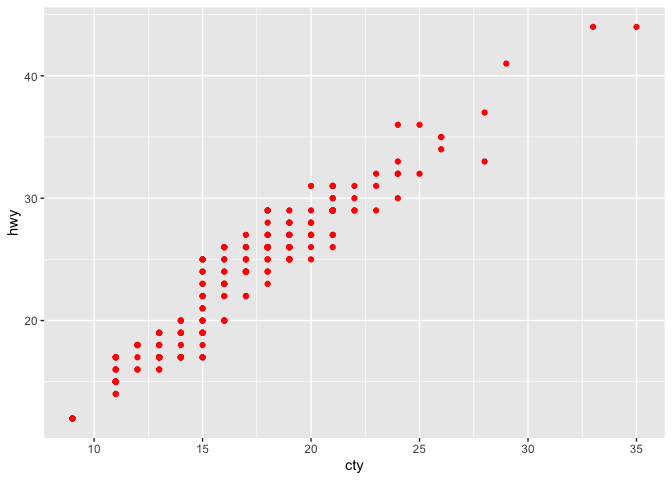
#>
#> $execution_result$output
#> character(0)If you want to create a new agent with the exact same
characteristics, you can use the clone_agent method. Note
that the new Agent can have the same name but it’ll have a different
ID:
rai_agent <- Agent$new(
  name = "Rai musician",
  instruction = "You are an expert in Algerian Rai music",
  llm_object = openai_4_1_mini
)

result <- rai_agent$invoke("Give me a rai song in 1 sentence. Don't explain")

rai_agent$agent_id
#> [1] "76243ae7-0d8f-4aa9-96e9-3f8d3c10ec75"
rai_agent$name
#> [1] "Rai musician"
rai_agent$instruction
#> [1] "You are an expert in Algerian Rai music"
rai_agent$messages
#> [[1]]
#> [[1]]$role
#> [1] "system"
#>
#> [[1]]$content
#> [1] "You are an expert in Algerian Rai music"
#>
#>
#> [[2]]
#> [[2]]$role
#> [1] "user"
#>
#> [[2]]$content
#> [1] "Give me a rai song in 1 sentence. Don't explain"
#>
#>
#> [[3]]
#> [[3]]$role
#> [1] "assistant"
#>
#> [[3]]$content
#> [1] "\"Ya Rayah\" by Rachid Taha."
new_rai_agent <- rai_agent$clone_agent(new_name = "Just Rai")
#> ✔ Agent cloned successfully. New ID: f4790a08-8109-456c-ba5d-a459f39f95e3
new_rai_agent$agent_id
#> [1] "f4790a08-8109-456c-ba5d-a459f39f95e3"
new_rai_agent$name
#> [1] "Just Rai"
new_rai_agent$instruction
#> [1] "You are an expert in Algerian Rai music"
new_rai_agent$messages
#> [[1]]
#> [[1]]$role
#> [1] "system"
#>
#> [[1]]$content
#> [1] "You are an expert in Algerian Rai music"
#>
#>
#> [[2]]
#> [[2]]$role
#> [1] "user"
#>
#> [[2]]$content
#> [1] "Give me a rai song in 1 sentence. Don't explain"
#>
#>
#> [[3]]
#> [[3]]$role
#> [1] "assistant"
#>
#> [[3]]$content
#> [1] "\"Ya Rayah\" by Rachid Taha."The validate_response() method provides intelligent
LLM-based validation of agent responses against custom criteria. This
powerful feature uses the agent’s own LLM to evaluate whether a response
meets specified validation standards, returning both a score and
detailed feedback.
The method evaluates the response against your criteria. It returns a validation score (0-1) and determines if the response is valid based on your threshold.
fact_checker <- Agent$new(
  name = "fact_checker",
  instruction = "You are a factual assistant.",
  llm_object = openai_4_1_mini
)

prompt <- "What is the capital of Algeria?"
response <- fact_checker$invoke(prompt)

validation <- fact_checker$validate_response(
  prompt = prompt,
  response = response,
  validation_criteria = "The response must be factually accurate and mention Algiers as the capital",
  validation_score = 0.8
)
#> ✔ The response is considered valid with a score of 1

validation
#> $prompt
#> [1] "What is the capital of Algeria?"
#>
#> $response
#> The capital of Algeria is Algiers.
#>
#> $validation_criteria
#> [1] "The response must be factually accurate and mention Algiers as the capital"
#>
#> $validation_score
#> [1] 0.8
#>
#> $valid
#> [1] TRUE
#>
#> $score
#> [1] 1
#>
#> $feedback
#> [1] "The response is factually accurate and explicitly mentions Algiers as the capital of Algeria, fully meeting the validation criteria."content_agent <- Agent$new(
name = "content_creator",
instruction = "You are a creative writing assistant.",
llm_object = openai_4_1_mini
)
prompt <- "Write a 1 sentence advertisment about an Algerian dates (the fruid)"
response <- content_agent$invoke(prompt)
validation <- content_agent$validate_response(
prompt = prompt,
response = response,
validation_criteria = "Response must be under 100 words, professional tone, and highlight Algerian dates",
validation_score = 0.75
)
#> ✔ The response is considered valid with a score of 1
validation
#> $prompt
#> [1] "Write a 1 sentence advertisment about an Algerian dates (the fruid)"
#>
#> $response
#> Experience the rich, natural sweetness of Algerian dates—nature’s golden
#> treasure packed with flavor and nutrition in every bite!
#>
#> $validation_criteria
#> [1] "Response must be under 100 words, professional tone, and highlight Algerian dates"
#>
#> $validation_score
#> [1] 0.75
#>
#> $valid
#> [1] TRUE
#>
#> $score
#> [1] 1
#>
#> $feedback
#> [1] "The response is a single sentence advertisement that highlights Algerian dates with a professional tone. It emphasizes the qualities of the dates, such as rich natural sweetness, flavor, and nutrition, meeting all the validation criteria perfectly."The validation results include the original prompt, response, criteria, score, feedback, and validity status, making it easy to audit and improve your agent’s performance.
You can easily register one or several tools using the
register_tools method. The tools are created using
ellmer, consider the following example:
openai_4_1 <- ellmer::chat(
  name = "openai/gpt-4.1",
  credentials = function() {Sys.getenv("OPENAI_API_KEY")},
  echo = "none"
)

weather_agent <- Agent$new(
  name = "weather_assistant",
  instruction = "You are a weather assistant.",
  llm_object = openai_4_1
)

weather_function_algiers <- function() {
  msg <- glue::glue(
    "35 degrees Celcius, it's sunny and there's no precipitation."
  )
  msg
}

get_weather_in_algiers <- ellmer::tool(
  fun = weather_function_algiers,
  name = "get_weather_in_algiers",
  description = "Provide the current weather in Algiers, Algeria."
)

weather_function_berlin <- function() {
  msg <- glue::glue(
    "10 degrees Celcius, it's cold"
  )
  msg
}

get_weather_in_berlin <- ellmer::tool(
  fun = weather_function_berlin,
  name = "get_weather_in_berlin",
  description = "Provide the current weather in Berlin, Germany"
)

weather_agent$register_tools(
  tools = list(
    get_weather_in_algiers,
    get_weather_in_berlin
  )
)
#> ✔ Registered tool: get_weather_in_algiers
#> ✔ Registered tool: get_weather_in_berlin
One can list the available tools:
weather_agent$list_tools()
#> [1] "get_weather_in_algiers" "get_weather_in_berlin"
After registering the tools, the Agent will use them when needed:
weather_agent$invoke("How's the weather in Algiers?")
#> The weather in Algiers is currently sunny with a temperature of 35°C and no
#> precipitation.weather_agent$invoke("How's the weather in Berlin?")
#> The weather in Berlin is currently cold with a temperature of 10°C.One can remove one or several tool using the
remove_tools method or remove all agents at one using the
clear_tools method:
weather_agent$clear_tools()
#> ✔ Cleared 2 tools
weather_agent$list_tools()
#> ℹ No tools registered
#> character(0)The generate_and_register_tool method allows you to
create tools from simple natural language descriptions (for example,
“create a tool that saves files to disk”) and automatically generates
the complete R code needed to implement them. It produces a fully
functional R function that encapsulates the tool’s logic, along with a
complete ellmer tool definition that includes proper type
specifications and clear parameter descriptions.
weather_agent$generate_and_register_tool(
  description = "create a tool that uses httr to call the open-meteo api https://open-meteo.com/en/docs to get the current weather about any city in the world"
)
#>
#> ── Generating tool from description ──
#>
#> ℹ Description: create a tool that uses httr to call the open-meteo api https://open-meteo.com/en/docs to get the current weather about any city in the world
#>
#> ── The following tool will be registered ──
#>
#> get_current_weather <- function(city) {
#>   library(httr)
#>   library(jsonlite)
#>   geo_url <- "https://geocoding-api.open-meteo.com/v1/search"
#>   geo_res <- httr::GET(geo_url, query = list(name = city, count = 1))
#>   geo_data <- jsonlite::fromJSON(httr::content(geo_res, as = "text", encoding = "UTF-8"))
#>   if (is.null(geo_data$results) || length(geo_data$results) == 0) {
#>     stop(sprintf("City '%s' not found.", city))
#>   }
#>   lat <- geo_data$results$latitude[1]
#>   lon <- geo_data$results$longitude[1]
#>   weather_url <- "https://api.open-meteo.com/v1/forecast"
#>   weather_res <- httr::GET(weather_url, query = list(latitude = lat, longitude = lon, current_weather = "true"))
#>   weather_data <- jsonlite::fromJSON(httr::content(weather_res, as = "text", encoding = "UTF-8"))
#>   if (is.null(weather_data$current_weather)) {
#>     stop("Current weather data not available.")
#>   }
#>   list(
#>     city = city,
#>     latitude = lat,
#>     longitude = lon,
#>     temperature = weather_data$current_weather$temperature,
#>     windspeed = weather_data$current_weather$windspeed,
#>     winddirection = weather_data$current_weather$winddirection,
#>     weathercode = weather_data$current_weather$weathercode,
#>     time = weather_data$current_weather$time
#>   )
#> }
#> get_current_weather <- ellmer::tool(
#>   get_current_weather,
#>   name = "get_current_weather",
#>   description = "Get the current weather for any city in the world using the open-meteo API.",
#>   arguments = list(
#>     city = ellmer::type_string(
#>       description = "Name of the city to get the current weather for. Can include optional country for disambiguation (e.g. 'Paris, France')."
#>     )
#>   )
#> )
#> ✔ Registered tool: get_current_weather
#> ✔ Tool successfully generated and registered
#> ℹ Call '<agent-name>$llm_object$get_tools()' to inspect the tools
#> ℹ If satisfied, you can copy the tool and put in your corresponding R fileweather_agent$invoke(
prompt = "what is the current weather in Tokyo?"
)
#> The current weather in Tokyo is 1.3°C with a wind speed of 5.2 km/h (direction:
#> 34°). The weather code is 51, which typically indicates light drizzle or mist.We can create as many Agents as we want, the LeadAgent
will dispatch the instructions to the agents and provide with the final
answer back. Let’s create three Agents, a researcher, a
summarizer and a translator:
researcher <- Agent$new(
  name = "researcher",
  instruction = "You are a research assistant. Your job is to answer factual questions with detailed and accurate information. Do not answer with more than 2 lines",
  llm_object = openai_4_1_mini
)

summarizer <- Agent$new(
  name = "summarizer",
  instruction = "You are agent designed to summarise a give text into 3 distinct bullet points.",
  llm_object = openai_4_1_mini
)

translator <- Agent$new(
  name = "translator",
  instruction = "Your role is to translate a text from English to German",
  llm_object = openai_4_1_mini
)
Now, the most important part is to create a
LeadAgent:
lead_agent <- LeadAgent$new(
  name = "Leader",
  llm_object = openai_4_1_mini
)
Note that the LeadAgent cannot receive an
instruction as it has already the necessary
instructions.
Next, we need to assign the Agents to LeadAgent, we do
it as follows:
lead_agent$register_agents(c(researcher, summarizer, translator))
#> ✔ Agent(s) successfully registered.

lapply(lead_agent$agents, function(x) {x$name})
#> [[1]]
#> [1] "researcher"
#>
#> [[2]]
#> [1] "summarizer"
#>
#> [[3]]
#> [1] "translator"
Before executing your prompt, you can ask the LeadAgent
to generate a plan so that you can see which Agent will be
used for which prompt, you can do it as follows:
prompt_to_execute <- "Tell me about the economic situation in Algeria, summarize it in 3 bullet points, then translate it into German."

plan <- lead_agent$generate_plan(prompt_to_execute)
#> ✔ Plan successfully generated.
plan
#> [[1]]
#> [[1]]$agent_id
#> 31256121-0e52-481a-b28f-144ce2d2b1c5
#>
#> [[1]]$agent_name
#> [1] "researcher"
#>
#> [[1]]$model_provider
#> [1] "OpenAI"
#>
#> [[1]]$model_name
#> [1] "gpt-4.1-mini"
#>
#> [[1]]$prompt
#> [1] "Research the current economic situation in Algeria, focusing on key indicators such as GDP growth, unemployment rate, inflation, and major economic sectors."
#>
#>
#> [[2]]
#> [[2]]$agent_id
#> f512a0a5-d605-49b4-98e3-8639c17095b7
#>
#> [[2]]$agent_name
#> [1] "summarizer"
#>
#> [[2]]$model_provider
#> [1] "OpenAI"
#>
#> [[2]]$model_name
#> [1] "gpt-4.1-mini"
#>
#> [[2]]$prompt
#> [1] "Summarize the researched economic information into 3 concise bullet points highlighting the most important aspects."
#>
#>
#> [[3]]
#> [[3]]$agent_id
#> 018c0194-781d-4f6e-a7d2-adbb43ba3e0c
#>
#> [[3]]$agent_name
#> [1] "translator"
#>
#> [[3]]$model_provider
#> [1] "OpenAI"
#>
#> [[3]]$model_name
#> [1] "gpt-4.1-mini"
#>
#> [[3]]$prompt
#> [1] "Translate the 3 bullet points from English into German accurately, maintaining the original meaning."
Now, in order now to execute the workflow, we just need to call the
invoke method which will behind the scene delegate the
prompts to suitable Agents and retrieve back the final information:
response <- lead_agent$invoke("Tell me about the economic situation in Algeria, summarize it in 3 bullet points, then translate it into German.")
#>
#> ── Using existing plan ──
#>
response
#> - Das BIP-Wachstum Algeriens ist mit 2-3 % moderat und wird hauptsächlich durch
#> Hydrokarbone sowie Diversifizierungsinitiativen angetrieben.
#> - Die Arbeitslosigkeit bleibt mit 11-12 % hoch, wobei die
#> Jugendarbeitslosigkeit ein erhebliches Problem darstellt.
#> - Die Inflation ist niedrig, etwa bei 2-3 %, während die wichtigsten
#> Wirtschaftssektoren Hydrokarbone, Landwirtschaft und Dienstleistungen umfassen.If you want to inspect the multi-agents orchestration, you have
access to the agents_interaction object:
lead_agent$agents_interaction
#> [[1]]
#> [[1]]$agent_id
#> 31256121-0e52-481a-b28f-144ce2d2b1c5
#>
#> [[1]]$agent_name
#> [1] "researcher"
#>
#> [[1]]$model_provider
#> [1] "OpenAI"
#>
#> [[1]]$model_name
#> [1] "gpt-4.1-mini"
#>
#> [[1]]$prompt
#> [1] "Research the current economic situation in Algeria, focusing on key indicators such as GDP growth, unemployment rate, inflation, and major economic sectors."
#>
#> [[1]]$response
#> As of early 2024, Algeria's GDP growth is modest, around 2-3%, driven by
#> hydrocarbons and diversification efforts. Unemployment remains high, about
#> 11-12%, especially among youth. Inflation is relatively low, near 2-3%. Major
#> sectors are hydrocarbons (oil and gas), agriculture, and services.
#>
#> [[1]]$edited_by_hitl
#> [1] FALSE
#>
#>
#> [[2]]
#> [[2]]$agent_id
#> f512a0a5-d605-49b4-98e3-8639c17095b7
#>
#> [[2]]$agent_name
#> [1] "summarizer"
#>
#> [[2]]$model_provider
#> [1] "OpenAI"
#>
#> [[2]]$model_name
#> [1] "gpt-4.1-mini"
#>
#> [[2]]$prompt
#> [1] "Summarize the researched economic information into 3 concise bullet points highlighting the most important aspects."
#>
#> [[2]]$response
#> - Algeria's GDP growth is modest at 2-3%, primarily fueled by hydrocarbons and
#> diversification initiatives.
#> - Unemployment remains high at 11-12%, with youth unemployment being a
#> significant concern.
#> - Inflation is low, around 2-3%, while key economic sectors include
#> hydrocarbons, agriculture, and services.
#>
#> [[2]]$edited_by_hitl
#> [1] FALSE
#>
#>
#> [[3]]
#> [[3]]$agent_id
#> 018c0194-781d-4f6e-a7d2-adbb43ba3e0c
#>
#> [[3]]$agent_name
#> [1] "translator"
#>
#> [[3]]$model_provider
#> [1] "OpenAI"
#>
#> [[3]]$model_name
#> [1] "gpt-4.1-mini"
#>
#> [[3]]$prompt
#> [1] "Translate the 3 bullet points from English into German accurately, maintaining the original meaning."
#>
#> [[3]]$response
#> - Das BIP-Wachstum Algeriens ist mit 2-3 % moderat und wird hauptsächlich durch
#> Hydrokarbone sowie Diversifizierungsinitiativen angetrieben.
#> - Die Arbeitslosigkeit bleibt mit 11-12 % hoch, wobei die
#> Jugendarbeitslosigkeit ein erhebliches Problem darstellt.
#> - Die Inflation ist niedrig, etwa bei 2-3 %, während die wichtigsten
#> Wirtschaftssektoren Hydrokarbone, Landwirtschaft und Dienstleistungen umfassen.
#>
#> [[3]]$edited_by_hitl
#> [1] FALSE
The above example is extremely simple, the usefulness of
mini007 would shine in more complex processes where a
multi-agent sequential orchestration has a higher value added.
visualize_plan()Sometimes, before running your workflow, it is helpful to view the
orchestration as a visual diagram, showing the sequence of agents and
which prompt each will receive. After generating a plan, you can call
visualize_plan():
This function displays the agents in workflow order as labeled boxes.
Hovering a box reveals the delegated prompt. The visualization uses the
DiagrammeR package. If no plan exists, it asks you to
generate one first.
lead_agent$visualize_plan()If you want to compare several LLM models, the
LeadAgent provides a broadcast method that
allows you to send a prompt to several different agents and get the
result for each agent back in order to make a comparison and potentially
choose the best agent/model for the defined prompt:
Let’s go through an example:
openai_4_1 <- ellmer::chat(
  name = "openai/gpt-4.1",
  credentials = retrieve_open_ai_credential,
  echo = "none"
)

openai_4_1_agent <- Agent$new(
  name = "openai_4_1_agent",
  instruction = "You are an AI assistant. Answer in 1 sentence max.",
  llm_object = openai_4_1
)

openai_4_1_nano <- ellmer::chat(
  name = "openai/gpt-4.1-nano",
  credentials = retrieve_open_ai_credential,
  echo = "none"
)

openai_4_1_nano_agent <- Agent$new(
  name = "openai_4_1_nano_agent",
  instruction = "You are an AI assistant. Answer in 1 sentence max.",
  llm_object = openai_4_1_nano
)
lead_agent$clear_agents() # removing previous agents
lead_agent$register_agents(c(openai_4_1_agent, openai_4_1_nano_agent))
#> ✔ Agent(s) successfully registered.lead_agent$broadcast(prompt = "If I were Algerian, which song would I like to sing when running under the rain? how about a flower?")
#> [[1]]
#> [[1]]$agent_id
#> [1] "cd06f7bb-7b47-4233-9d0d-6f49a432a925"
#>
#> [[1]]$agent_name
#> [1] "openai_4_1_agent"
#>
#> [[1]]$model_provider
#> [1] "OpenAI"
#>
#> [[1]]$model_name
#> [1] "gpt-4.1"
#>
#> [[1]]$response
#> As an Algerian, you might enjoy singing "Ya Rayah" when running under the rain,
#> and for a flower, you could sing "Fleur d’Algérie."
#>
#>
#> [[2]]
#> [[2]]$agent_id
#> [1] "73055678-6ce9-4357-83ee-1f5e7f122ee8"
#>
#> [[2]]$agent_name
#> [1] "openai_4_1_nano_agent"
#>
#> [[2]]$model_provider
#> [1] "OpenAI"
#>
#> [[2]]$model_name
#> [1] "gpt-4.1-nano"
#>
#> [[2]]$response
#> As an Algerian, you might enjoy singing "Ya Rayah" by Rachid Taha when running
#> under the rain and "Lila" by Cheb Khaled when admiring a flower.You can also access the history of the broadcasting
using the broadcast_history attribute:
lead_agent$broadcast_history
#> [[1]]
#> [[1]]$prompt
#> [1] "If I were Algerian, which song would I like to sing when running under the rain? how about a flower?"
#>
#> [[1]]$responses
#> [[1]]$responses[[1]]
#> [[1]]$responses[[1]]$agent_id
#> [1] "cd06f7bb-7b47-4233-9d0d-6f49a432a925"
#>
#> [[1]]$responses[[1]]$agent_name
#> [1] "openai_4_1_agent"
#>
#> [[1]]$responses[[1]]$model_provider
#> [1] "OpenAI"
#>
#> [[1]]$responses[[1]]$model_name
#> [1] "gpt-4.1"
#>
#> [[1]]$responses[[1]]$response
#> As an Algerian, you might enjoy singing "Ya Rayah" when running under the rain,
#> and for a flower, you could sing "Fleur d’Algérie."
#>
#>
#> [[1]]$responses[[2]]
#> [[1]]$responses[[2]]$agent_id
#> [1] "73055678-6ce9-4357-83ee-1f5e7f122ee8"
#>
#> [[1]]$responses[[2]]$agent_name
#> [1] "openai_4_1_nano_agent"
#>
#> [[1]]$responses[[2]]$model_provider
#> [1] "OpenAI"
#>
#> [[1]]$responses[[2]]$model_name
#> [1] "gpt-4.1-nano"
#>
#> [[1]]$responses[[2]]$response
#> As an Algerian, you might enjoy singing "Ya Rayah" by Rachid Taha when running
#> under the rain and "Lila" by Cheb Khaled when admiring a flower.When executing an LLM workflow that relies on many steps, you can set
Human In The Loop (HITL) trigger that will
check the model’s response at a specific step. You can define a
HITL trigger after defining a LeadAgent as
follows:
openai_llm_object <- ellmer::chat(
  name = "openai/gpt-4.1-mini",
  credentials = retrieve_open_ai_credential,
  echo = "none"
)

lead_agent <- LeadAgent$new(
  name = "Leader",
  llm_object = openai_llm_object
)

lead_agent$set_hitl(steps = 1)
#> ✔ HITL successfully set at step(s) 1.

lead_agent$hitl_steps
#> [1] 1
After setting the HITL to step 1, the workflow execution
will pose and give the user 3 choices:
Note that you can set a HITL at several steps, for
example lead_agent$set_hitl(steps = c(1, 2)) will set the
HITL at step 1 and step 2.
Sometimes you want to send a prompt to several agents and pick the
best answer. In order to choose the best prompt, you can also rely on
the Lead Agent which will act a dudge and pick for you the
best answer. You can use the judge_and_choose_best_response
method as follows:
openai_4_1 <- ellmer::chat(
  name = "openai/gpt-4.1",
  credentials = retrieve_open_ai_credential,
  echo = "none"
)

stylist_1 <- Agent$new(
  name = "stylist",
  instruction = "You are an AI assistant. Answer in 1 sentence max.",
  llm_object = openai_4_1
)

openai_4_1_nano <- ellmer::chat(
  name = "openai/gpt-4.1-nano",
  credentials = retrieve_open_ai_credential,
  echo = "none"
)

stylist_2 <- Agent$new(
  name = "stylist2",
  instruction = "You are an AI assistant. Answer in 1 sentence max.",
  llm_object = openai_4_1_nano
)

openai_4_1_mini <- ellmer::chat(
  name = "openai/gpt-4.1-mini",
  credentials = retrieve_open_ai_credential,
  echo = "none"
)

stylist_lead_agent <- LeadAgent$new(
  name = "Stylist Leader",
  llm_object = openai_4_1_mini
)

stylist_lead_agent$register_agents(c(stylist_1, stylist_2))
#> ✔ Agent(s) successfully registered.

best_answer <- stylist_lead_agent$judge_and_choose_best_response(
  "what's the best way to wear a blue kalvin klein shirt in winter with a pink pair of trousers?"
)

best_answer
#> $proposals
#> $proposals[[1]]
#> $proposals[[1]]$agent_id
#> [1] "91f03880-c94d-4ee7-850a-8e20b6054c68"
#>
#> $proposals[[1]]$agent_name
#> [1] "stylist"
#>
#> $proposals[[1]]$response
#> Layer the blue Calvin Klein shirt under a neutral-colored sweater or blazer
#> (like grey or navy), pair with your pink trousers, and add classic winter
#> accessories like a dark coat and matching scarf for a balanced, stylish look.
#>
#>
#> $proposals[[2]]
#> $proposals[[2]]$agent_id
#> [1] "b1be43b0-99ea-4bb0-9c1b-5d244ace0257"
#>
#> $proposals[[2]]$agent_name
#> [1] "stylist2"
#>
#> $proposals[[2]]$response
#> Layer the blue Calvin Klein shirt with a neutral-colored sweater or blazer and
#> add warm accessories to create a stylish winter look with pink trousers.
#>
#>
#>
#> $chosen_response
#> Layer the blue Calvin Klein shirt under a neutral-colored sweater or blazer
#> (like grey or navy), pair with your pink trousers, and add classic winter
#> accessories like a dark coat and matching scarf for a balanced, stylish look.The agents_dialog method facilitates an intelligent
two-agent collaboration process designed to refine and optimize
responses through iterative dialogue.
It enables two registered agents to take alternating turns improving each other’s outputs until a high-quality final response is reached. The method supports a configurable maximum number of iterations (default: 5) and includes a self-stopping mechanism where agents can indicate agreement by beginning their message with “CONSENSUS:”, followed by the final answer.
If no consensus is achieved within the iteration limit, the lead
agent automatically synthesizes a concluding response based on the
conversation. Throughout the exchange, every interaction is stored
within the self$dialog_history object. Consider the
following examples:
ceo1 <- Agent$new(
  name = "ceo1",
  instruction = paste0(
    "You are a CEO in  a dates company based in Ouergla, Algeria, ",
    "You want to boost their exports to Germany. "
  ),
  llm_object = openai_4_1_mini
)

ceo2 <- Agent$new(
  name = "ceo2",
  instruction = paste0(
    "You are the CEO of a dates company based in Ouergla, Algeria. ",
    "You are considering starting a marketing compaign to boost the exports to Germany. "
  ),
  llm_object = openai_4_1_mini
)

lead_agent <- LeadAgent$new(
  name = "Leader",
  llm_object = openai_4_1_mini
)

lead_agent$register_agents(c(ceo1, ceo2))
#> ✔ Agent(s) successfully registered.

result <- lead_agent$agents_dialog(
  prompt = "Propose a plan in 1 sentence max about a marketing strategy that will boost the export of dates to Germany for the next 2 years",
  agent_1_id = ceo1$agent_id,
  agent_2_id = ceo2$agent_id,
  max_iterations = 3
)
#>
#> ── Starting agent dialog ──
#>
#> Agent 1: ceo1
#> Agent 2: ceo2
#> Max iterations: 3
#> ℹ Iteration 1 - ceo1 responding...
#> ℹ Iteration 1 - ceo2 responding...
#> ℹ Iteration 2 - ceo1 responding...
#> ℹ Iteration 2 - ceo2 responding...
#> ℹ Iteration 3 - ceo1 responding...
#> ℹ Iteration 3 - ceo2 responding...
#> ✔ Consensus reached by ceo2 at iteration 3!
#> ✔ Dialog completed.

# Access the final response
result$final_response
#> execute a digital marketing campaign featuring Ouergla heritage and
#> sustainability, augmented by virtual tastings, influencer partnerships, and
#> selective on-site sampling through German retail partners at major food events
#> over the next two years.

# View the dialog history
result$dialog_history
#> [[1]]
#> [[1]]$iteration
#> [1] 1
#>
#> [[1]]$agent_id
#> [1] "6059ac80-4e2b-4cde-b1a0-0a0de7a8f2e8"
#>
#> [[1]]$agent_name
#> [1] "ceo1"
#>
#> [[1]]$response
#> Develop a targeted digital marketing campaign highlighting the premium quality
#> and health benefits of Ouergla dates, coupled with partnerships with German
#> organic and specialty food retailers to build brand trust and visibility over
#> the next two years.
#>
#>
#> [[2]]
#> [[2]]$iteration
#> [1] 1
#>
#> [[2]]$agent_id
#> [1] "cd526cbe-feaa-4c2d-89bb-2343412dc215"
#>
#> [[2]]$agent_name
#> [1] "ceo2"
#>
#> [[2]]$response
#> Your proposal to develop a targeted digital marketing campaign emphasizing the
#> premium quality and health benefits of Ouergla dates is well aligned with our
#> goal to boost exports to Germany; however, to fully leverage our unique
#> regional advantage, I suggest also incorporating storytelling about the Ouergla
#> heritage and sustainable farming practices in the campaign, and organizing
#> German tasting events in key cities to engage consumers directly over the next
#> two years.
#>
#>
#> [[3]]
#> [[3]]$iteration
#> [1] 2
#>
#> [[3]]$agent_id
#> [1] "6059ac80-4e2b-4cde-b1a0-0a0de7a8f2e8"
#>
#> [[3]]$agent_name
#> [1] "ceo1"
#>
#> [[3]]$response
#> Your addition of Ouergla heritage storytelling and sustainable farming
#> practices enriches the digital campaign well, but organizing tasting events in
#> Germany may incur high costs and logistic complexities that strain our current
#> export budget; instead, I propose leveraging local German partners to host
#> joint virtual tasting sessions and influencer collaborations to maintain
#> consumer engagement efficiently over the next two years.
#>
#>
#> [[4]]
#> [[4]]$iteration
#> [1] 2
#>
#> [[4]]$agent_id
#> [1] "cd526cbe-feaa-4c2d-89bb-2343412dc215"
#>
#> [[4]]$agent_name
#> [1] "ceo2"
#>
#> [[4]]$response
#> Your suggestion to replace physical tasting events with virtual tastings and
#> influencer collaborations is sensible given budget and logistical constraints;
#> to further ensure trust and local presence, I propose combining these virtual
#> engagements with limited on-site sampling through select German retail partners
#> during major food fairs or festivals to maximize impact within budget over the
#> next two years.
#>
#>
#> [[5]]
#> [[5]]$iteration
#> [1] 3
#>
#> [[5]]$agent_id
#> [1] "6059ac80-4e2b-4cde-b1a0-0a0de7a8f2e8"
#>
#> [[5]]$agent_name
#> [1] "ceo1"
#>
#> [[5]]$response
#> Your combined approach of virtual tastings, influencer collaborations, and
#> limited on-site sampling at key food fairs respects our budget while boosting
#> brand visibility, so CONSENSUS: execute a digital marketing campaign featuring
#> Ouergla heritage and sustainability, augmented by virtual tastings, influencer
#> partnerships, and selective on-site sampling through German retail partners at
#> major food events over the next two years.
#>
#>
#> [[6]]
#> [[6]]$iteration
#> [1] 3
#>
#> [[6]]$agent_id
#> [1] "cd526cbe-feaa-4c2d-89bb-2343412dc215"
#>
#> [[6]]$agent_name
#> [1] "ceo2"
#>
#> [[6]]$response
#> CONSENSUS: execute a digital marketing campaign featuring Ouergla heritage and
#> sustainability, augmented by virtual tastings, influencer partnerships, and
#> selective on-site sampling through German retail partners at major food events
#> over the next two years.
If the instructions of the Agents differ fundamentally, they won’t be
able to find a consensus and the LeadAgent will take over
and provide a final response:
ceo1 <- Agent$new(
  name = "ceo1",
  instruction = paste0(
    "You are a CEO in  a dates company based in Ouergla, Algeria, ",
    "You want to boost their exports to Germany. ",
    "You don't care about the budget. You want to spend as much as possible. "
  ),
  llm_object = openai_4_1_mini
)

ceo2 <- Agent$new(
  name = "ceo2",
  instruction = paste0(
    "You are the CEO of a dates company based in Ouergla, Algeria. ",
    "You are considering starting a marketing compaign to boost the exports to Germany. ",
    "For you the marketing budget is super important and you don't want to spend too much. "
  ),
  llm_object = openai_4_1_mini
)

lead_agent <- LeadAgent$new(
  name = "Leader",
  llm_object = openai_4_1_mini
)

lead_agent$register_agents(c(ceo1, ceo2))
#> ✔ Agent(s) successfully registered.

result <- lead_agent$agents_dialog(
  prompt = "Propose a plan in 1 sentence max about a marketing strategy that will boost the export of dates to Germany for the next 2 years",
  agent_1_id = ceo1$agent_id,
  agent_2_id = ceo2$agent_id,
  max_iterations = 3
)
#>
#> ── Starting agent dialog ──
#>
#> Agent 1: ceo1
#> Agent 2: ceo2
#> Max iterations: 3
#> ℹ Iteration 1 - ceo1 responding...
#> ℹ Iteration 1 - ceo2 responding...
#> ℹ Iteration 2 - ceo1 responding...
#> ℹ Iteration 2 - ceo2 responding...
#> ℹ Iteration 3 - ceo1 responding...
#> ℹ Iteration 3 - ceo2 responding...
#> ! Max iterations reached without explicit consensus.
#> ℹ Using lead agent to synthesize final response...
#> ✔ Dialog completed.

# Access the final response
result$final_response
#> Develop a two-year marketing strategy combining targeted digital campaigns and
#> influencer partnerships to build brand awareness cost-effectively, while
#> allocating a moderate budget for selective premium event sponsorships and
#> upscale retail placements to strategically enhance the export of Ouergla dates
#> to Germany.

# View the dialog history
result$dialog_history
#> [[1]]
#> [[1]]$iteration
#> [1] 1
#>
#> [[1]]$agent_id
#> [1] "e75ee46c-ada5-461f-9765-70e1744e58b3"
#>
#> [[1]]$agent_name
#> [1] "ceo1"
#>
#> [[1]]$response
#> Launch a high-end, culturally immersive marketing campaign across Germany
#> featuring premium Algerian dates in luxury stores and gourmet festivals,
#> combined with extensive influencer partnerships, targeted digital ads, and
#> exclusive tasting events to position Ouergla dates as a must-have delicacy.
#>
#>
#> [[2]]
#> [[2]]$iteration
#> [1] 1
#>
#> [[2]]$agent_id
#> [1] "992da0c0-f3c7-4c7d-9763-b571e729c6df"
#>
#> [[2]]$agent_name
#> [1] "ceo2"
#>
#> [[2]]$response
#> While the proposed high-end luxury campaign could elevate our brand, it risks
#> exceeding our tight budget constraints; instead, I suggest leveraging targeted
#> social media marketing with authentic stories about Ouergla dates, partnering
#> with German specialty food retailers for product placement, and organizing
#> low-cost tasting events to build awareness and demand over the next two years
#> without heavy expenses.
#>
#>
#> [[3]]
#> [[3]]$iteration
#> [1] 2
#>
#> [[3]]$agent_id
#> [1] "e75ee46c-ada5-461f-9765-70e1744e58b3"
#>
#> [[3]]$agent_name
#> [1] "ceo1"
#>
#> [[3]]$response
#> Their proposal focuses on budget-conscious tactics, but since I explicitly want
#> to spend as much as possible without budget limits, their cost-saving approach
#> conflicts with my directive to invest heavily for maximum impact. Therefore, I
#> propose instead to implement an extravagant, multi-channel marketing blitz
#> including large-scale sponsorships of major German food events, premium
#> in-store displays in top retail chains, celebrity chef partnerships showcasing
#> Ouergla dates in exclusive recipes, and a high-profile media campaign across
#> TV, print, and digital platforms for two full years to firmly establish our
#> brand presence and dominate the German market.
#>
#>
#> [[4]]
#> [[4]]$iteration
#> [1] 2
#>
#> [[4]]$agent_id
#> [1] "992da0c0-f3c7-4c7d-9763-b571e729c6df"
#>
#> [[4]]$agent_name
#> [1] "ceo2"
#>
#> [[4]]$response
#> Their proposal directly conflicts with my core requirement to minimize
#> marketing expenditure, as it suggests an extravagant, high-cost campaign that
#> disregards budget constraints; therefore, I counterpropose a highly focused,
#> low-cost digital and grassroots campaign using targeted social media ads,
#> collaborations with niche German health and gourmet influencers, and strategic
#> participation in affordable local food fairs to cost-effectively boost exports
#> over two years.
#>
#>
#> [[5]]
#> [[5]]$iteration
#> [1] 3
#>
#> [[5]]$agent_id
#> [1] "e75ee46c-ada5-461f-9765-70e1744e58b3"
#>
#> [[5]]$agent_name
#> [1] "ceo1"
#>
#> [[5]]$response
#> Their proposal emphasizes minimizing marketing expenditure, which directly
#> contradicts my role's explicit directive to spend as much as possible with no
#> budget constraints; therefore, I reaffirm that the optimal plan is to execute a
#> lavish, comprehensive marketing campaign across Germany—including large-scale
#> sponsorships of premium food events, celebrity chef endorsements, luxury retail
#> placements, and a multi-channel media blitz over two years—to maximize brand
#> visibility and export growth without any financial limitations.
#>
#>
#> [[6]]
#> [[6]]$iteration
#> [1] 3
#>
#> [[6]]$agent_id
#> [1] "992da0c0-f3c7-4c7d-9763-b571e729c6df"
#>
#> [[6]]$agent_name
#> [1] "ceo2"
#>
#> [[6]]$response
#> Your proposal to spend lavishly on marketing campaigns directly conflicts with
#> my primary role as CEO with a strict focus on minimizing expenditures;
#> therefore, I must reiterate that a cost-efficient marketing strategy leveraging
#> digital channels, targeted influencer collaborations, and participation in
#> affordable German food markets is the most suitable approach to boost exports
#> while respecting our limited budget.Please note that the mini007 project is released with a Contributor Code of Conduct. By contributing to this project, you agree to abide by its terms.